Educational content only. No promises of outcomes.

Nutritional Concepts: A Structured Overview

The following presents six thematic categories of natural nutritional support documented in the scientific and traditional nutritional literature. Each entry offers a detailed informational overview, contextual background, and a summary of generally recognized properties — presented strictly as educational reference material.

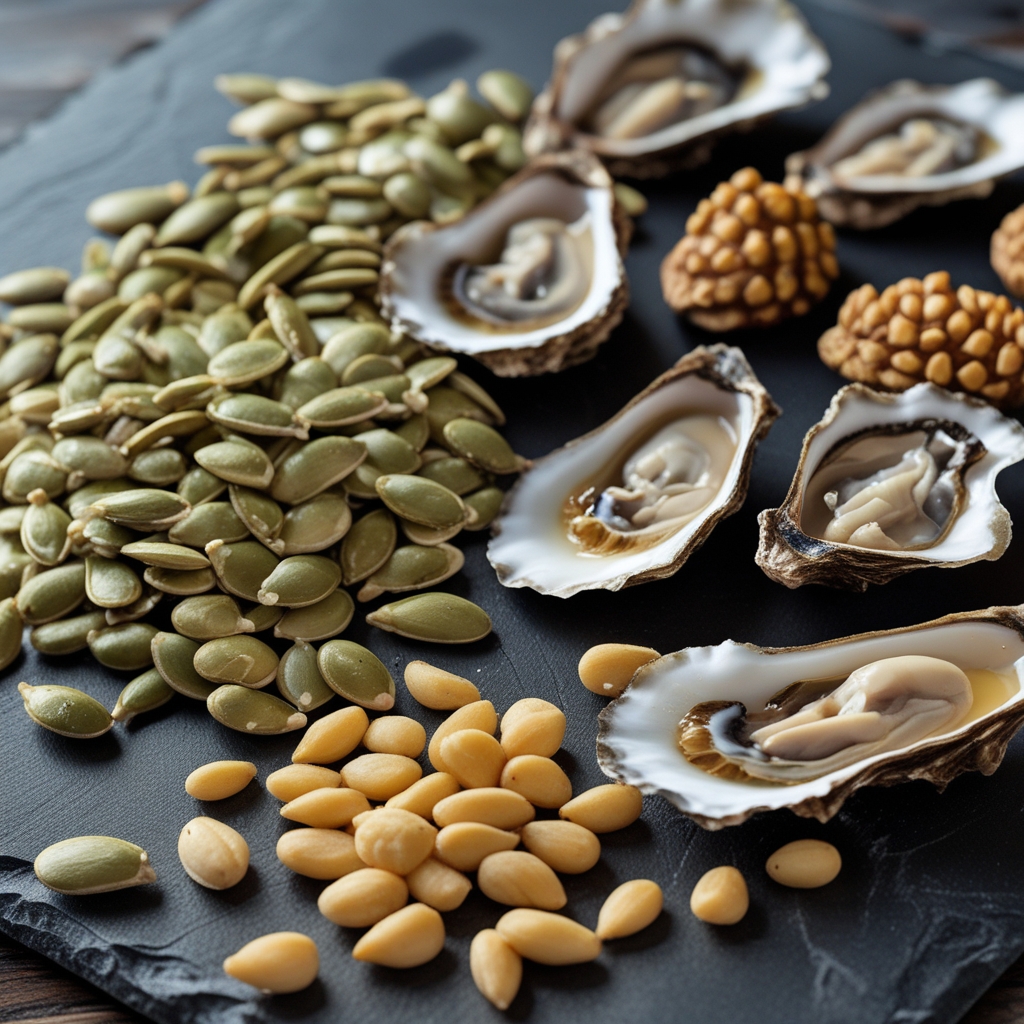
Close-up of raw pumpkin seeds, oysters on ice, and toasted pine nuts arranged on a dark slate board with soft natural light highlighting their varied textures
Concept 01

Zinc and Micromineral Nutrition

Zinc is among the most studied trace elements in nutritional science. It serves as a catalytic component in over 300 enzymatic reactions and performs structural and regulatory functions across multiple biological systems. Dietary sources include shellfish, legumes, seeds, and whole grains. Zinc absorption is influenced by dietary fibre content, the presence of phytic acid, and concurrent mineral intake — illustrating the complexity of mineral nutrition beyond simple intake calculations. Nutritional surveys in European populations identify zinc as a mineral meriting dietary attention, particularly among individuals following plant-predominant dietary patterns.

  • Participates in over 300 distinct enzymatic reactions across biological systems
  • Functions as a structural component in DNA-binding protein domains (zinc finger proteins)
  • Documented role in supporting normal immune cell development and differentiation

Sunlight streaming through large windows onto a minimalist wooden table with a small potted succulent plant, creating warm geometric shadow patterns on a cream-colored surface
Concept 02

Vitamin D and Photobiological Synthesis

Vitamin D3 (cholecalciferol) is unique among vitamins in being synthesized endogenously via the action of UVB radiation on 7-dehydrocholesterol in the skin. At northern European latitudes — including all of Germany — UVB radiation intensity from October through March is insufficient for meaningful cutaneous synthesis. This geographic reality makes Vitamin D a nutritional compound of particular contextual relevance in German and European nutritional discourse. Dietary sources including fatty fish, egg yolks, and certain fortified foods contribute to but often do not fully compensate for reduced sun exposure. Vitamin D3 undergoes hepatic hydroxylation to 25-hydroxyvitamin D, the primary circulating storage form, before further renal activation to its biologically active form, calcitriol (1,25-dihydroxyvitamin D3).

  • Central regulatory role in calcium and phosphorus homeostasis and bone mineralisation
  • Widely expressed vitamin D receptor (VDR) suggests involvement across multiple tissue types
  • Seasonally variable synthesis patterns make dietary awareness particularly relevant in northern Europe
Dried ashwagandha roots and whole fenugreek seeds on a ceramic plate beside a small clay mortar and pestle with a scattered arrangement of green leaves on a natural linen cloth
Concept 03

Adaptogenic Botanical Compounds

The phytochemical category of adaptogens encompasses plant-derived compounds studied for their potential to modulate physiological responses to various stressors. The term, originating in Soviet pharmacological research of the mid-twentieth century, has been refined in subsequent decades. Withania somnifera (Ashwagandha) contains withanolides — steroidal lactones — whose properties have been investigated in numerous nutritional and phytochemical studies. Panax ginseng, containing ginsenosides, has an extensive documented history spanning more than 2,000 years in East Asian nutritional traditions. Rhodiola rosea, a high-altitude plant with rosavins and salidroside as primary bioactive compounds, has also attracted scientific attention. All are studied as general botanical compounds, not as agents addressing specific conditions.

  • Extensively documented in traditional nutritional systems across multiple cultures and centuries
  • Contain structurally distinct bioactive compounds studied for their general physiological properties
  • Subject of growing contemporary phytochemical and nutritional research interest
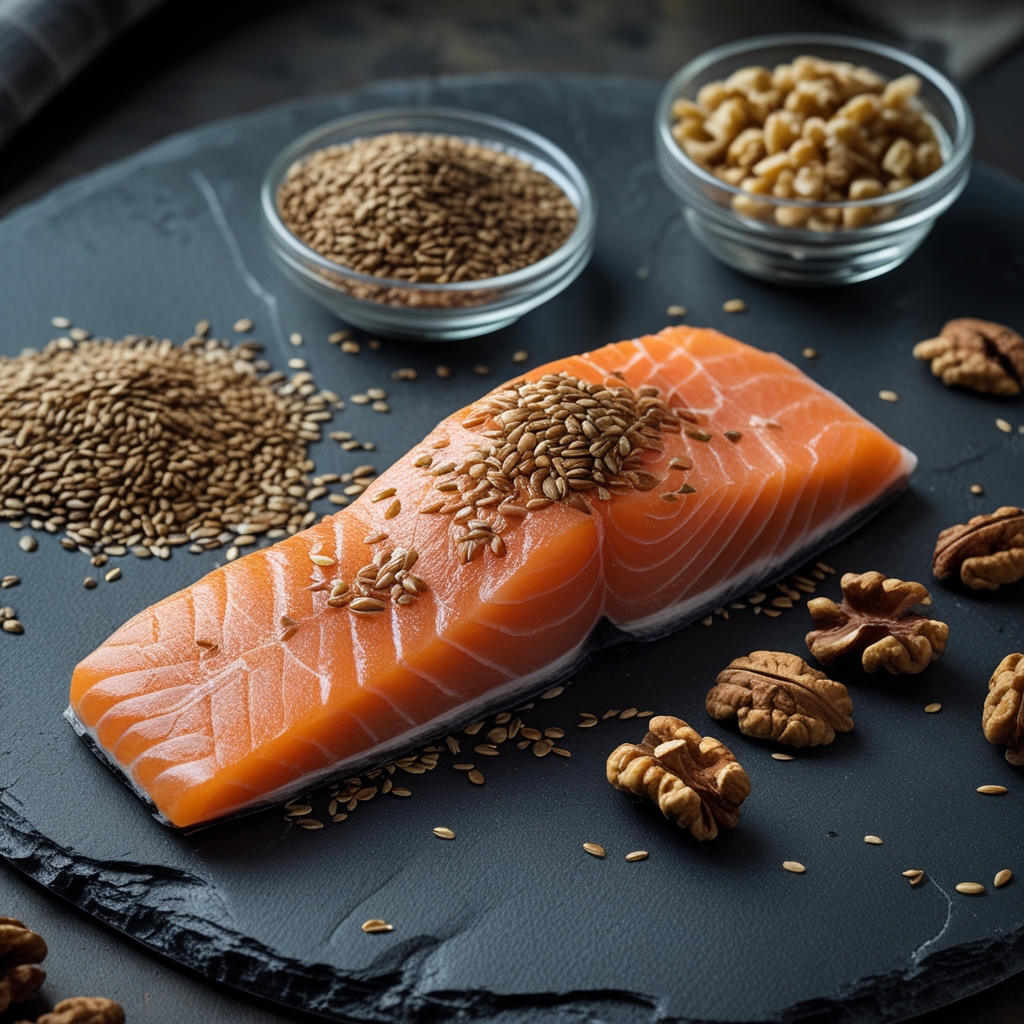
Fresh wild salmon fillet with visible pink flesh beside a small glass bowl of flaxseeds and a scattering of walnuts on a dark charcoal slate surface with cool natural light
Concept 04

Omega-3 Fatty Acids in Nutritional Context

The omega-3 polyunsaturated fatty acid family comprises three principal compounds of nutritional relevance: alpha-linolenic acid (ALA), found in flaxseed, chia seeds, and walnuts; eicosapentaenoic acid (EPA); and docosahexaenoic acid (DHA) — the latter two predominantly found in marine sources including fatty fish and algae. ALA is classified as an essential fatty acid as the human body cannot synthesize it de novo. The conversion efficiency of ALA to EPA and DHA in humans is limited and variable, which is why marine or algal sources are considered more direct providers of the biologically active long-chain forms. The structural roles of DHA in neural tissue and the cell membrane composition implications of EPA-to-DHA ratios are subjects of active nutritional research. These fatty acids are structural components of cell membranes throughout the body, influencing membrane fluidity and the signalling environment of cells.

  • ALA is classified as an essential dietary fatty acid with no endogenous synthesis pathway
  • DHA is a major structural phospholipid component of neuronal cell membranes
  • Among the most extensively researched dietary fat categories in nutritional epidemiology
Overhead arrangement of dark chocolate squares, raw almonds, sunflower seeds, and fresh spinach leaves on a light linen surface with gentle even daylight illumination
Concept 05

Magnesium: A Multifunctional Macro-Mineral

Magnesium is the fourth most abundant mineral in the human body and participates in over 600 enzymatic reactions. It serves as a critical cofactor for ATP (adenosine triphosphate) synthesis — the principal cellular energy currency — and is essential for nucleic acid synthesis, protein formation, and the regulation of cellular membrane potential. As a physiological calcium antagonist, it also plays a role in muscle relaxation and normal cardiac rhythm. Dietary sources include dark leafy vegetables, legumes, nuts and seeds, and whole grains. Soil depletion, food processing losses, and suboptimal dietary patterns are cited in nutritional literature as factors contributing to populations with intakes below recommended reference values. The European Food Safety Authority (EFSA) has established adequate intake reference values for magnesium differentiated by age and sex.

  • Cofactor in ATP synthesis — the fundamental energy currency of all cellular processes
  • Participates in DNA and RNA synthesis, contributing to normal cell replication processes
  • EFSA-recognized adequate intake reference values reflect its population-level nutritional importance
Assortment of deep-colored antioxidant-rich fruits including blueberries, blackcurrants, acai berries, and pomegranate arils in small ceramic bowls on a weathered grey wooden surface
Concept 06

Polyphenols and Dietary Antioxidant Compounds

Dietary polyphenols represent the largest and most structurally diverse class of phytochemicals, with over 8,000 individual compounds identified in the plant kingdom. They are subdivided into flavonoids (including flavanols, flavanones, isoflavones, and anthocyanins), phenolic acids, stilbenes (including resveratrol from grapes), and lignans. Their antioxidant properties — the capacity to donate electrons to reactive oxygen species, thereby neutralizing them — have been extensively characterized in in vitro studies. The bioavailability of polyphenols in vivo is considerably more complex, being influenced by gut microbiome composition, food matrix effects, and structural features of individual compounds. Dietary sources with the highest polyphenol density include darkly pigmented berries, pomegranate, cocoa, olive oil, green tea, and a broad range of coloured vegetables.

  • Structurally diverse class of over 8,000 characterized plant-derived compounds
  • Electron-donating capacity provides documented in vitro antioxidant activity
  • Gut microbiome interactions form an active area of polyphenol bioavailability research

Materials and Context Notice: The materials presented on this site are for informational purposes only. They do not constitute individual recommendations, acknowledge the diversity of approaches in daily life, and are not a substitute for personal decision-making or professional advice. All concepts presented here are drawn from publicly available nutritional and scientific literature and are offered as general educational context only.